
high-signal-chart-workflow
@randalolson/high-signal-chart-workflowSafety
Runnable
Well-formed
Use when you have an idea for a data story and want a publication-quality chart back. The agent finds an authoritative public dataset, drafts three chart-type variants in parallel, picks the strongest, then iterates against deterministic design and overlap checks plus a design-rubric judge until the chart carries the story.
See it in action
A real run on the idea "US median home price vs. median household income since 1984."
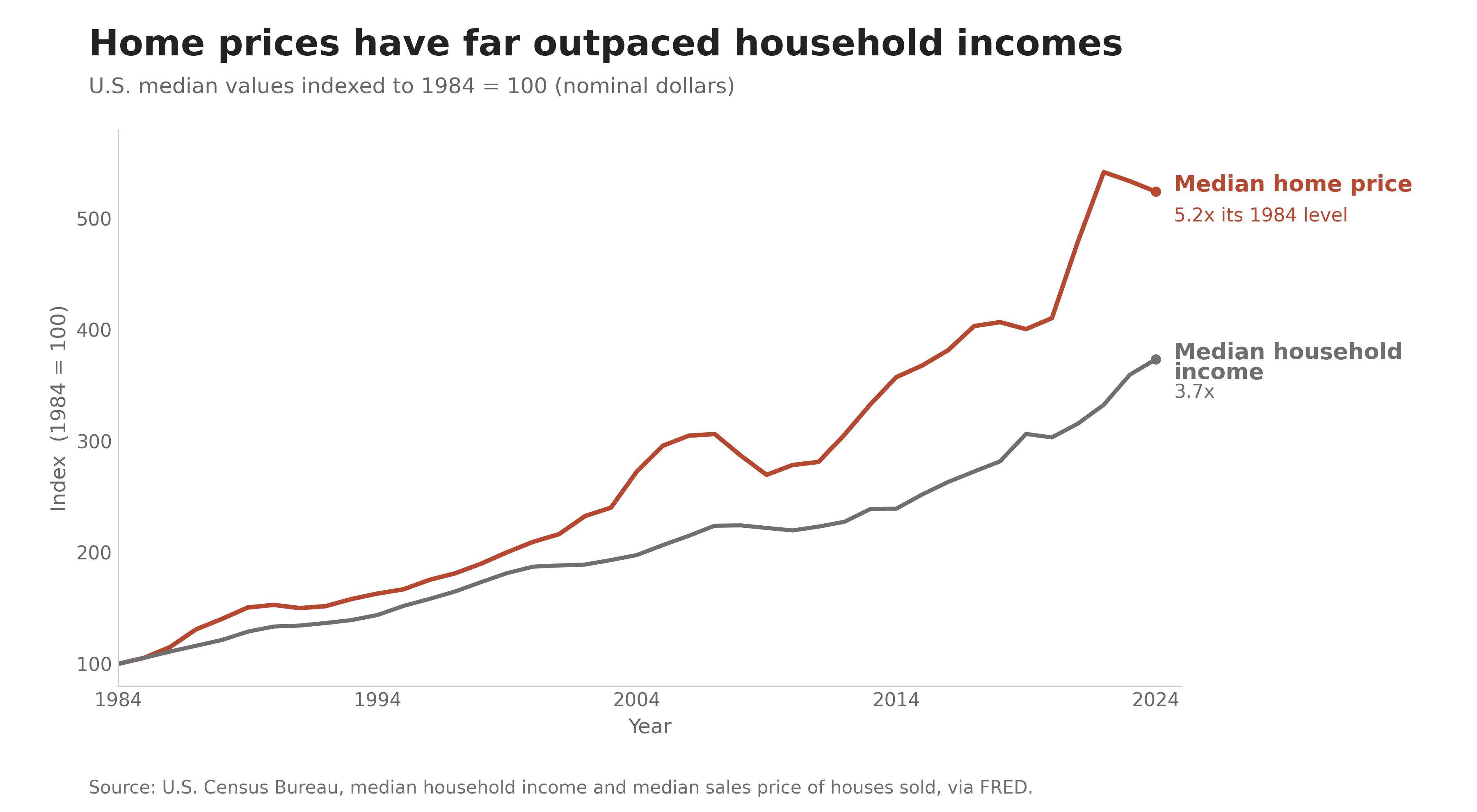
Census figures, indexed to 1984. The comparison reads on the first look: two lines labeled in place, a title that states the point, muted color, an honest scale.
The version most people ship in 60 seconds
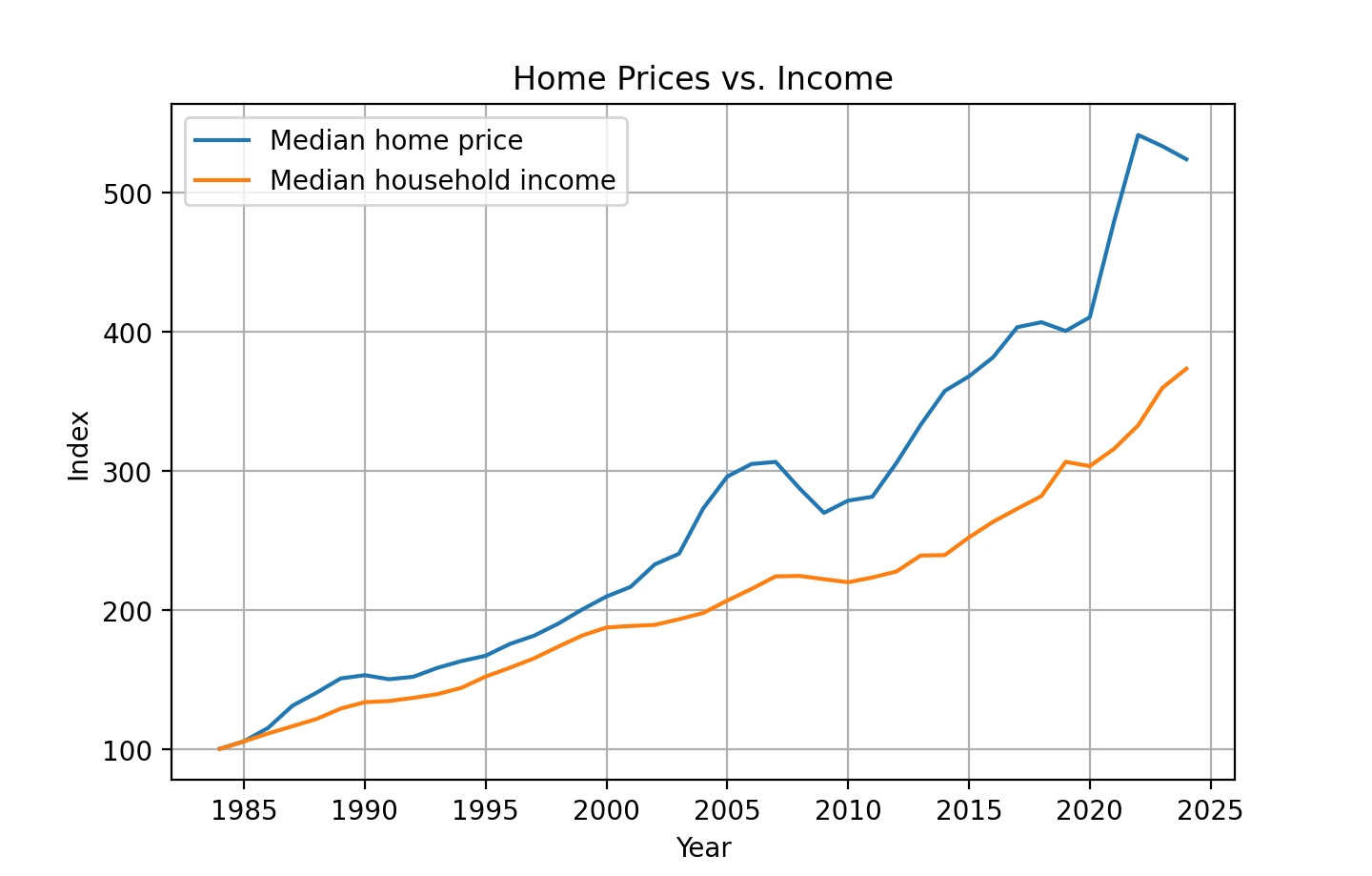
Same data, same tool, no workflow. The design judge fails it and reports why:
Direct labeling: FAIL, the two series are identified only through a legend even though direct labels could easily fit at the right ends of the lines. Integrated annotations: FAIL, the title is purely descriptive and does not state a takeaway. Overall verdict: FAIL.
The rubric runs on every revision
Even a near-final draft, already labeled and titled, got sent back:
Axis readability: FAIL, the x-axis has year ticks only and no explicit axis title.
After one fix, an x-axis title, every criterion passed:
Direct labeling: PASS. Muted, purposeful color: PASS. Integrated annotations: PASS. Graphical integrity: PASS. Overall verdict: PASS.
A chart leaves the workflow only after all eight criteria pass.
Use this template
Your agent fetches this runbook and runs it, revising the output until the verifiers pass.
First time with Goodeye?
Connect your agent over MCP, then ask it to fetch this template by its identifier. Or install the CLI and run the command below.
claude mcp add --transport http goodeye https://mcp.goodeye.dev/mcpuv tool install goodeyeConnecting over MCP prompts a quick sign-in. The CLI can fetch and run a public template with no account.
Fetch or fork
goodeye templates get @randalolson/high-signal-chart-workflowgoodeye templates fork @randalolson/high-signal-chart-workflowAlso available from
get_template(identifier="@randalolson/high-signal-chart-workflow")curl https://api.goodeye.dev/v1/templates/@randalolson/high-signal-chart-workflow